How to see air and hear silence

Places have different colored air. When I debarked the plane in Saudi Arabia, I realized something – you can see air. The air has color. I never noticed this before because I had not often left the center of the North American continent, where the air tends to have a light blue-green tinge, like corn-seedling-green mixed with Walmart-blue. But the air in Saudi Arabia is red-orange, somehow simultaneously clear but also the color of flame and sand. There’s a scientific reason for this, due to suspended particles in the atmosphere and the latitudinal angle of the sun in the sky.


Places have smells. Southern Wisconsin smells like moss, but northern Wisconsin smells like wet granite. The Dakotas smell like cedar wind. St. Louis smells like cigarettes on a summer evening and baseball hot dogs, but New York City smells like traffic on a summer evening and street corner hot dogs. Saudi Arabia smells like sand and sand.


Places have sounds. Wisconsin sounds like early birds and the distant hum of agricultural industry. The Dakotas sound like campfire crackle and the silence after a shotgun blast. Silence is a sound. Sand sounds like silence.


Saudi Arabia has two sounds: the extremes of very loud and very quiet. For example, take the dichotic tones of the Arabic language. To my Western ears, it first sounded angry and emotional, coming from a part of the throat that English speakers reserve for shouting or hacking up lung disease. Arabic communication has no Middle American coyness or fake nice. If a Saudi person doesn’t like something, they will tell you with great passion. And if they do like something, they may pretend it’s rubbish so they can get a cheaper price. Bargaining is an art form in Arabic culture. After time and some language study, I learned that people weren’t arguing, it was just the cadence of the language. But still, it set my nerves on edge for a few months.


Along with this was the chaos of the city noise. Riyadh at the time had a population of around 7 million and was growing exponentially. My idea of the big city was Minneapolis, with a population about 80% smaller. Only Mexico City and New York City are bigger than Riyadh, and New York not by much. Even Chicago, the third largest city in USA, has only half the population of Riyadh, despite sprawling over almost 10 times the area. The population density creates traffic and shouting which at first drove me crazy.


But I could always sleep after the sun set, because Riyadh is a desert city, and the desert is quiet, especially at night. In a conservative Muslim country, there are no bumping night clubs or midnight theater matinees. Arabic language can also be very soft and quiet at nighttime, when people sit on their roof tops to sip fruit flavored tobacco from cool burbling water pipes and murmur at cat ear volume. If you go out in the desert, you can experience true quiet that’s something like true darkness when they turn the lights out during cave tours. This is true silence of the wide open spaces, and sand.


Sand sand sand. It’s everywhere – not just the soil under your feet. It coats the entryways, stairwells, windowpanes, comes through cracks in the doors and leaves miniature sand dunes on your floor. It gets in your eyes and teeth when the wind blows. The sand got into my ears and then my brain and I don’t know if I ever got it all out.

Part 1 – How to Work Abroad, January – April 2013

Many imagine a life of global travel and adventure. Southwest Wisconsin is the most beautiful place in the world, but it’s nice to check out other corners of the planet just to make sure. Doing so is easier than you think, and I’ll tell you how. A generation ago, this would have been a wild dream, but today it’s available to anyone with a college degree. I’ve even met senior citizens still enjoying an exotic and comfortable international lifestyle in their golden years.


It all starts by getting a little thing called a TEFL certificate (TEFL = Teaching English as a Foreign Language). Depending on the institution, this certificate takes 3-6 months to complete. After you get your teaching certificate, you will have options. Many people prefer Japan or Korea, but I was always more interested in the Middle East. Ten years ago, I left Fennimore, and since then I’ve lived in Saudi Arabia, Abu Dhabi, Spain, Croatia, London, and Istanbul.


It goes all the way back to 9/11. I was 12 years old on that day and until then I only knew magic lamp stories and vague images of people bowing down to pray on rugs with exotic curls of emerald green and gold. But after 9/11, scenes of camels and camouflage in the desert filled the 24 hour news channels, and the AM radio was full of shouting about Islamic extremism and war for oil or freedom (depending on who was shouting). I was fascinated and never accepted the war time propaganda that painted all Arabs or Muslims as fanatics, so I read history and geopolitics and promised myself, “Someday I’ll go and see first hand what it’s like over there.”

With a TEFL certificate and my Bachelor’s degree, I had the opportunity to go work in education, and I saw myself as a cultural ambassador. There was also another, less high minded, reason: the money was great. Arabia pays double what you make if you teach in the United States, accommodations are provided, and it’s tax free – seemed like a no brainer. I’m the only English Major to pay off student loans in the 21st century. 

I was nervous how long it would take to get hired, but I found a job within a month. The region is still desperate for native English teachers, and all it takes is a college degree and an American passport to get snapped up. It was refreshing in those post-recession days of the 2010s when most of my graduating class were struggling to find anything in their field that payed a living wage. 

There was one problem as I prepared to leave the comfy embrace of my grandma’s kitchen on Blue School Road – I was broke. I got a job at Timothy’s Cafe and saved every penny for my travel expenses. The school paid for my flight tickets and accommodations, but I still needed money for expenses upon arrival. 

I had one other thing to do before leaving: interview families to adopt my Siberian Husky, Kanut. 10 years later, that’s still one of the saddest goodbyes of my life. He was my best friend for 5 years, since he was a puppy. We went through a lot together and I wished he could understand where I was going and why. Years after we said our last goodbye, he still comes to visit in my dreams. I hope he understands. 

I found a good home for Kanut, saved up $500, bought a second-hand computer, and I was ready. In April 2013, Grandma drove me through the Driftless Area and the Wisconsin River Valley, past my birthplace in Platteville, my uncle’s dairy farm in Dodgeville, and finally to the Madison bus terminal. From there, it was on to Chicago O’hare and then Riyadh, Saudi Arabia. My ancestors had rode west into the sunset, but for me, it was time to go east.

Remember (and reexamine) the Alamo

Permit me to begin this academic essay with a little personal context: It’s currently the year 2020. I have strong misgivings about the morality of the American project, and I’m deeply conflicted about my identity as an American citizen in the context of 21st century globalism. I’ve passed most of the last decade living on the other side of the planet from USA. I grew up in far north in the country, as did my ancestors, who generation by generation moved west through the north woods, culturally and physically much closer to Canada than to Texas. So why do I remember the Alamo? Because I do. I can’t help it. 

It’s common knowledge that history is written by the victors; nevertheless, there is always more than one version of history, more than one perspective regarding who were the good guys and who were the bad. As such, in this essay, I’m not going to make a qualitative statement about who were the bad guys and good guys in the history of the American southwest. Instead, I’m simply going to illustrate a few case studies in the subjectivity of the region’s history. 

Clearly, the legend of the Alamo and it’s geopolitical implications are one of the most glaring illustrations of this subjectivity. Como un norteamericano, I learned songs from Disney movies about the virtues of Davy Crocket, (“king of the wild frontier”), but never learned that David Bowie was a slave trader. Even today, the heroes of the Alamo are lauded, as can be seen in the 2018 Houston Chronicle article “Alamo defenders defined what it means to be heroic” (Erica Grieder). Whether it’s portrayed in Hollywood cinema or a mandatory part of public education, the story of the Alamo is a foundational piece of our national self-image as the land of the free and home of the brave. It symbolizes the Americans as simultaneously victims and victors – brave and strong in the face of overwhelming odds. 

But there’s another interpretation of the legend, as we can find in América ocupada por Rodolfo Acuña (1976). In his perspective, the Alamo was defended by lawless mercenaries, and it had little strategic value (31). The Mexican army was hungry, had been marching for weeks, and was poorly armed, while the norteamericanos, despite being fewer in number, were an elite militia with the most modern military technology. In the end, Davy Crocket and his men didn’t fight to the last breath, killing Mexicans with their bare hands. They surrendered, begged for mercy, but were nevertheless executed for their crimes against the state (32). Within the months following the battle, the memory of the Alamo would be used to justify a massacre of unarmed, surrendering and starving Mexican forces at the battle of San Jacinto (33), and in subsequent years the legacy of Crocket and Bowie as brave defenders of the frontier morphed into justifications for rape, pillage and other war crimes committed by the Texas Rangers against innocent civilians who were supposedly protected by the treaty of Guadalupe Hidalgo (56 – 60).

The subjectivity of the Alamo legend and it’s legacy symbolizes the multi-dimensionality of the broader history. Obscured by the fog of time and the layers of nationalistic bias, it’s impossible to assign a qualitative morality to one side or the other. However, in modern days, there is certainly quantifiable injustice which began during this period of history. Mexican-Americans have since been viewed as second class citizens. Gringos used the myth of American exceptionalism as justification to steal land which was guaranteed to remain with Mexicans who found themselves on the north side of the border after the Treaty of Guadalupe Hidalgo. Generations of Latinos have been viewed as nothing more than cheap labor or gangsters without the opportunities available to a norteamericano such as myself. While the history is subjective, the modern reality is very concrete. If ICE agents putting kids in cages and vigilante posses of white supremacists in the desert view themselves as a continuation of the legacy of frontier heroism, that legacy surely must be reexamined. 

One tempting perspective on the history of the new world is that there are no good guys and bad guys – there are just multiple bad guys. If one were to subscribe to the philosophy of karma on a society-wide scale, the injustices of the anglos against the latinos could be viewed as payback, centuries in the making, for injustices perpetrated by the Spanish against the indigenous population. It’s hard to ignore the genocidal activities of Cortés, for example (Ramón Tamames), or the cruel tactics which the church used to spread its religion among the indigenous population of their new territories. Modern metropolises from San Antonio to Los Angeles began as small missions on the frontier of Spanish expansion, and this frontier often advanced hand-in-hand with executions, mutilations, and violations (Javier Zurro). There are various interpretations, but always the fact that, by modern standards, the Catholic inquisition was cruel, and attitudes of white supremacy were inherent in the actions of all European colonizers. Anglos are not the sole perpetrators of injustice in the New World, rather simply the most recently successful. 

It takes an admirable level of mental gymnastics to deny the cruelty of the Spanish Conquista of the New World. After all, it’s called “The Conquest”, not a “A polite cultural exchange with some new friends.”  However, such mental gymnastics have indeed been performed. One such example is the book Spanish Roots of America, published by Our Sunday Visitor Publishing Division of Hunting, Indiana, in which Bishop David Arias (born in Franco’s Spain, 1929, died in Trump’s America, 2019) tells a story of the virtuous missionaries who spread education and civilization across the New World. Arias calls them “explorers” rather than “conquistadores”, downplaying their greed for gold while emphasizing their role as gentleman in “times full of romanticism” (33) who paved the way for missionaries who “had to have good reputations and credibility” (56) and building missions which were “a definite success for the preservation of the Indian, his introduction to the faith, and his human progress” (55). By the end of the book, the Spanish conquest of the New World appears to be a humanitarian mission with the primary goal of building schools, planting fields, and guaranteeing the eternal salvation of indigenous souls. It’s hardly noted that many of these indigenous souls entered eternity thanks to Spanish steel.  

A popular approach in modern Spain is to recontextualize the violent history of the Conquista. For example, the Fundación Civilización Hispánica has a primary goal “desmontar la Leyenda Negra de la imagen histórica de España en el mundo” with hopes that by doing so it can “cohesionar España y a la Comunidad hispánica” (civilizacionhispanica.org). In this project, reinterpreting history isn’t only for the purpose of improving the image of Spain in the Americas, but to provide real humanitarian opportunities to real people across Latin America. While the historical perspective is debatable, the goals are inarguably admirable. 

In an incredible short documentary, titled Frontera, John Jota Leaños writes about the historical figure Estebanico, a Moorish member of an early conquistador party who was largely responsible for introducing the “cities of gold” legends to the early Spanish colonists. “Who was this guy?” the narrator asks. “Does he bring medicine and prophecy? Or poison and misery? Is he a slave of the colonizers? Or is he their leader? No one knows for sure, but I think Estebanico was killed near Zuñi. His legacy is one of confusion in the borderlands, where blood is still being spilled.” If you’ve read this far, I hope you take away two ideas. The first idea is that history is subjective, and I’m certainly not capable of looking back to find a good guy and a bad guy. Researchers who have spent a lifetime studying and people with direct ties to the history and land still have very diverse ideas about what really happened. However, the second idea is that, whatever the interpretation of history, the modern implications are unavoidable. The legacy of colonialism and violence in the new world affects real lives today, in the year 2020. For that reason, we will always remember the Alamo, but also must never feel too comfortable that we completely understand its legacy. 
ProcrAPPLEination Crisp

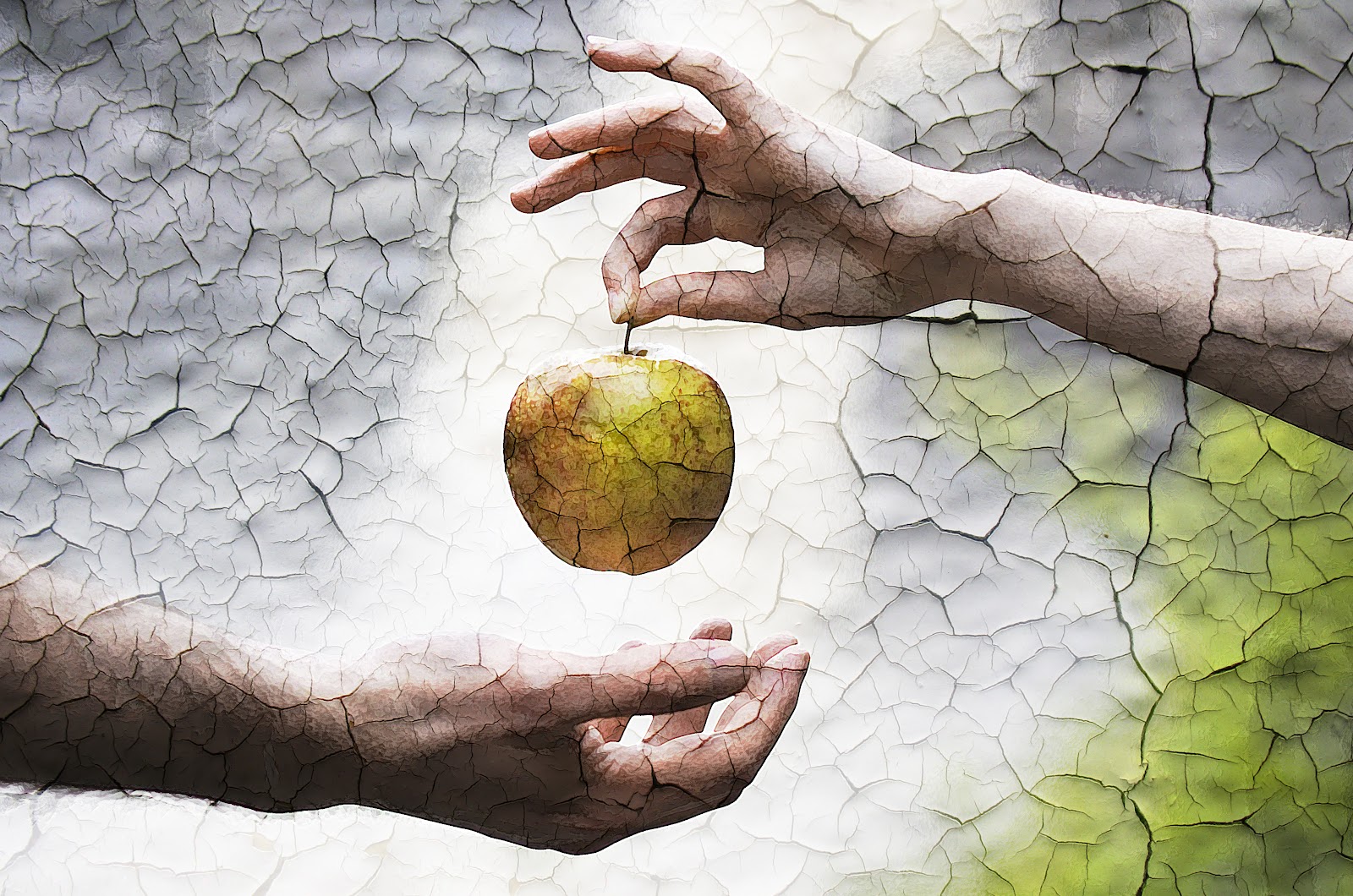
The Apple Of His Satanic Eye | The Return of the Modern Philosopher


There’s this weird thing about being under quarantine. In theory, I have more time, but it’s not really equating to any more production.

So what to catch you up on: when quarantine hit Spain, I was working at this kids’ English camp in the mountains. For the last two weeks, we’ve been here on lock down. 10 workers, all “my age” (well I mean, they’re in their early- to mid-twenties, and I pretend to be also) from around Europe. Some Irish, Brits, even a couple ex-Yu (from šibenik and Ilirska Bistrica – the Slovenian girl is wow but out of my league, will keep you posted). Also 1 manager, and the owner. Cool folks.

We’ve had plenty of food so far, as the place was stocked for 100 hungry teenagers. However, tomorrow they’re gonna begin shutting off the generators for most of the day. (They need to save fuel, and most of the other folks here only use the electricity to call their moms five times a day or look up porn. Lord knows nobody is using it for showers.) I need WiFi to teach / do uni, so I’m moving. One of the local chefs has been kind enough to rent me a room on her farm. She’s gonna cook for me, the price is affordable, and I’m in the mountains. Could be worse.

I have an album recommendation, which is Glassworks by Phillip Glass. I don’t know whether to call it ambient or classical. It’s neither really, but those are the closest genres I have to hand. I want to call it “ambient” due to the way it uses canons and minimalism, but it’s really too progressive to be called so. And I want to call it “classical”, because it uses an orchestra and a piano, but then again, so did System of a Down sometimes. Anyway, give it a listen if you haven’t heard it. Perhaps it’s most reminiscent of the soundtrack during the last scene of a Wes Anderson film: whimsical, mostly major key, nevertheless complicated.

I first enjoyed this album back in like 2016 or so, when I was in Abu Dhabi. I forget how I found it. I think I was going through a neo-classical phase. I again put it on a playlist on my phone randomly on January 25 this year. I was feeling arbitrary that day, so I titled that playlist “Year of the Rat: January 25 – March 25”. It included mostly Lofi Black Metal, although other randoms included Silver Jews and Souls of Mischief. I was in a small town in Sicily that day. It’s weird to think what things have changed in those two months.

Speaking of weird changes over time, I broke up with M on December 20, 2019. I told myself that I would stop caring about her three months from then, on March 20, 2020. I guess I don’t think about her anymore, except for that one night last August when the moon was full and we found this hidden beach by Kostanj. We climbed across some dangerous rocks and over a fence in the middle of the night but we were fine and the moon was still full. That was a good summer. I can’t wait to see that sea again.

So to the recipe: My mom and grandma are maestras of the Apple Crisp. I’ve had so many delicious crisps, I took them for granted as super simple until it was time for me to be master chef of our kitchen here at camp for a few days. I had limited ingredients; bio sam pun mi kurac with expiring fruit and the desire to impress. We hadn’t had dessert for a while, so I went with this. I think you’ve eaten it, in fact, I’m sure I made it for you guys while I was living there. So here’s the recipe. Love you, and see you in a few months inshallah.

Part 1: Make a crust

You just need two ingredients: biscuit / graham cracker crumbles and butter (margarine works, you just need to use a little more, like maybe 15% more). There is a Croatian brand of vanilla wafers that I can’t remember now (is it actually called “Nilla”?) but you can buy them pre-crumbled. Otherwise, get any tasty biscuit and crush it up into a powder. Use a hammer or your fists or some thick piece of cutlery. Get like three big handfuls of biscuit powder, enough to thickly cover the bottom of a baking dish. Then, take one big scoop of butter, half way melt it in the microwave (be careful! just like 20 seconds, watch it closely so it doesn’t start to splatter in the microwave and make a mess, you can also do this in a pan on the stove top), and mix it with the crumbles. Now, you have the crust ingredient. Take a baking dishhttps://images.app.goo.gl/xzC8jbZyc6QL5VmM9 (that glass one I left), and get some butter, and rub it around on the bottom and the sides. Not too thick, just enough so the glass is cloudy. This will keep it from sticking when it is finished and add some under goo. Now, press your buttery crumbles onto the bottom and sides, about .666 cm thick.

Part 2: Make the filling

You just need 3-4 ingredients, but only one is mandatory: fruit, sugar (optional), lemon juice (optional), cinnamon/nutmeg/clove (optional). Get 5 – 6 apples, depending on how hungry and rich you are. If it is winter time and the apples are not juicy, get 3 apples and 2 pears, because the pears add extra juice and an interesting flavor. Peel them and slice them as thinly as possible. Put them in a bowl and squeeze in the juice of half a lemon and put one big spoon of sugar and one half small spoon of cinnamon (don’t overuse the cinnamon, it’s really strong, less is more n’mean). Take a few more biscuit crumbles and sprinkle them on the top, but not as thick, like .2 cm. Some spots you should see the apples poking through (or many spots, you don’t even need to that layer at all to be honest). On those spots, put a small piece of butter. Put 6 pieces of butter on top. This will melt while it is baking. It’s tasty.

Finally: Bake it at 192 for about 45 minutes. First bake it for 27 minutes, then turn it around in the oven so it bakes evenly (don’t leave the door open too long, you wanna keep the heat in, so prepare your oven mitts first and open the door as little as possible). Then bake it for another 12 minutes, then open the oven to make sure it’s not burning. Watch closely and adjust the last 3-6 minutes as necessary (but leave the oven door shut or you let all the heat out!). You will know it is done when the butter is really bubbling through the top and the crumbles are just starting to turn brown. It’s ok to take it out a little early, because it will continue baking in the dish.

Fwd: BEANS (Guest Post)

Resultado de imagen para weird green beans

O.k. so first I got busy finishing uni projects, then was traveling, then suddenly it had been weeks since I’d posted here. You know how it goes. Sorry.

What’s silly about the delay is I’ve had this guest post sitting in my mail box for weeks and just needed to clean it up and publish. Anyway, here it is. Stay safe and healthy out there everyone.

EAT YOUR BEANS, KIDDO!

Let me introduce myself: my name is Eli, Simeon’s travel buddy, passionate vegan chef and bean enthusiast.

Today I have the pleasure to start my Bean Cuisine guest spot on Simeon’s blog. I can’t wait to teach you all the delicious and fun ways to prepare these extraordinary legumes.


Why beans you might ask? Well beans are not only super delicious, cheap and widely available, they are also full of plant protein, minerals and fiber.
So basically a good addition to every meal to keep you full and happy for hours to come.

The first type of bean is a classic – The green bean! 

Green Beans go with everything right? Well when I was a child, I never really craved them. Partially because of the way they were prepared, overcooked and basically a green, mushy blob. But with time I’ve started to learn the ways of slightly cooking them, seasoning right and making a perfect side dish – or main dish, if you fancy that –  to go with everything. 


Here’s what you will need:

350 gr of green beans (preferably fresh for ultimate crunchiness but frozen works well too, while saving you some pennies and chopping time)


1 small white onion

2 cloves of garlic

Olive oil

Salt and Peper

Let’s get started. 

1. (skip if you are using frozen) Give you green beans a good rinse and chop off both ends, then cut them to your preferred length.

2. Dice the onion and crush the garlic – set aside for now.

3. In a pot start boiling lightly salted water, when the water is close to boiling, add green beans and cook for 3-5 minutes. The trick here is that you should remove them from the water while they still maintain their vibrant green color.

4. Rinse beans with cold water to stop the cooking process.

5. In a pan heat up some olive oil and sauté the onions until they turn golden and slightly translucent.

6. Reduce the heat and add the crushed garlic. Sauté for another few minutes.

7. Toss the beans into the pan and mix everything well. Add salt and pepper to your liking!

8. Enjoy your beans!

I hope you will try this and soon discover the marvelous world of beans! Until next month!

Portabella and Caramelized Onions Emperador

Resultado de imagen para black metal portabella mushroom

Hello from Spain!

Life has calmed down a bit in some ways, in that I’m not on the move so much these last few weeks. We came to this camp in the mountains of Spain last week. It has been nice to be a bit more settled, and of course the life is beautiful here. We’ve been doing loads of hiking the last few days. Starting to feel a lot stronger and fitter.

I am staying busy with university stuff. I only have one class this session, but it is really tough! The class is “Law and Civil Rights in Latin America.” It involves loads of research and reading lots of legal case law, but in Spanish.

I met up with this friend Elli a few weeks ago. I enjoyed traveling alone, but there has also been benefits to having a traveling partner: easier logistics when having two people to figure out directions, rooms, etc. Also, Elli is a very strict vegan, which brings me to the inspiration for this weeks dish.

We were talking about hamburger substitutes, and Elli swears by the fake meat style burgers, which I have generally found to be unsatisfying. I mentioned that I enjoy a portabella mushroom burger, and she SCOFFED in my face. According to Elli, a thick slab of mushroom is no replacement for meat because she doesn’t feel full after. I disagree. We had strong disagreements.

As a way to express my autonomy and correctness, this week’s recipe will be a delicious mushroom sandwich. Again, simple, but what I want us to practice this week is “caramelizing”.

Like last week, this will involve preparing multiple simple parts:
* fried portabella mushroom
* caramelized onions
* fresh sliced tomato and lettuce
* toasted bun

Part 1: Slice your tomatoes and lettuce. Prepare some nice size pieces which look like they are perfect size to fit on top of a burger. Put them all on a plate and put this plate in the refrigerator.

Part 2: Time to caramelize those onions! “Caramelization” is a process whereby sugar + heat = a nice brown sticky flavor / texture. Onions contain natural sugar, so this is quite easy to do with them.
1) Put a generous “glug” of olive oil in a big pan. You want a fair amount of oil for this. Like, not a centimeter thick or anything, but enough that the entire bottom of the pan is covered.
2) Get it up to medium heat.
3) Slice the onions, differently than I showed you to do before. First, cut off the ends and remove the skins. Leave the onion whole (don’t cut it in half). Now, slice it as thinly as possible so how you have nice onion circles.
4) Throw the onions in the hot oil, and leave them there for quite a while, until they turn nice and brown. Stir them occasionally, and don’t let them burn, but you do want them properly browned at the end. That means they have caramelized.
* a little tip: if you are like me, you will LOVE these! There are never enough of them at the end of the meal, so don’t be afraid to do like 2 or 3 onions, depending on how big they are. If you have leftovers, you can always throw them in the fridge and eat them with something else.

Part 3: Fry your portabellas. A nice thing to do is to first melt some margarine in a bowl in the microwave, so you have “liquid butter.” Also, have handy some flour (any kind, although the yellow kind is nicest) in another bowl. First, immerse the portabella in the melted butter. Then, flop it over into the bowl with flour. Get it coated all over in the flour, then put it in a frying pan with a bit of oil or margarine. Cover it, and keep it on fairly low heat. Cook it for about 10 minutes, or until it seems, uh, yknow, “cooked”. At the very end, take the lid off and turn the heat up. Watch it quite closely here, but get both sides nice and hot to give it a little crisp.

Part 4: Since we’re being fancy, it’s nice to toast your buns. You can just use one of your still hot frying pans (dump out extra oil if it’s really juicy in there) and just put them on the hot surface for like a minute or so. You can butter your buns once they are hot, if you like.

Assemble sandwich! Put the portabella on the bottom, and put it upside down so you’ve got a nice surface to put a big spoonful of those caramelized mushrooms. Put on a nice slice of tomato, piece of lettuce, whatever sauces you prefer, and enjoy! Dobar tek!

I miss you guys and look forward to enjoying them together this summer 🙂

Happy Noodle Year!

Resultado de imagen para death metal chinese new year


So, this past week has been Chinese New Year, which meant I had less time teaching, which meant I got in more time having adventures. So sorry for not posting a recipe last week, but the addressee of this cookbook (Marko) was at some private once-in-a-lifetime gig anyway, so I don’t suppose my “Cookbook for Dummies” entry was missed. (Wait, Marko is no dummy. “Cookbook for Smarties who are Bad at Cooking-ies”…? I’ll work on it.)

Anyway, Chinese New Year tradition is to eat really long noodles to symbolize good luck. So I thought I would submit a dressed-up ramen noodle recipe this week. Marko is working on kitchen basics.

First, the usual stream of consciousness stuff before we get to the recipe.

Last night, part of my bus trip from Sicily to Rome involved a ferry boat from Messina to Villa San Giovanni.

These were my thoughts as I shivered on the deck, making the dark passage:


opaque oily chill
sea mocks attempts to know secrets
moonlight is feeble against profound depth

on the surface
metal churns and engines fume
far below
ancient faults grind in eternal anguish
begging for volcanic release

trapped in our machine
we strangers collected in motion

resist temptation
to ask our reasons
only remain certain
if we stop stop
we shall all surely perish


Speaking of dark musings, after listening to the album “Battlefield”, the combination of Slavic folk and the black angry drums and growls of war reminded me very much of the Soviet film “Come and See“. This is a MUCH WATCH for any cinemaphile, one of the most universally respected products of Soviet film, but it is not at all a feel good movie. It follows the journey of a young Belarussian boy as the Germans sweep across his rural homeland. He is a haunted witness to rape and genocide. There is no “Saving Private Ryan” flag waving, nor is it a post-modern “but who really were the bad guys?” statement. It’s simply very important history which we must never forget, and the filmmaker, Elem Klimov, tells this history with a skill matched only by names like Coppola, Cimono, or Kubric. Perhaps this film was able to do something which Hate Forest was not, which is to fully immerse itself in an artistic portrayal of the horrors of war and genocide without glorification or anticipation of further violence. Anyways, really watch “Come and See” sometime, but not before bed. Also Nazis are bad.

I was staying with a Couchsurf host near Mount Etna last week, and made again my peanut butter and celery soup, but this time without the peanut butter. Instead, I slow cooked some lentils and used them. How do you feel about lentils?

My host there in Belpasso, by the way, was a Naturist. Thankfully, he was not insistent that I followed the same clothing habits as him (although he did express some curiosity w/r/t the fact that I, like many American males, have undergone an operation at a very young age which is typically reserved for only Jews and Muslims in other countries). Anyway, I’m not at all shy about wearing or not wearing clothing around other men, as I’ve played plenty of sports and kind of like walking around with not so many clothes (it’s supposed to be good for your skin), but I still prefer to have all my bits held in place and something to keep my chest hair from falling in the soup! So it was a weird experience, but new experiences are why we travel!

So anyway, speaking of new things, back to the Chinese New Year noodles. (Insert “send noods” joke.)

Ingredients list is really simple for this one. I’m gonna write this recipe for one person, so if you want to make it bigger, just double everything.

* 1/2 onion or 3 garlic cloves
* 1 stick celery
* 1 small potato or half of a big potato (cubed – make the cubes about the size of your pinky fingernail – make sure to wash / scrub the potato a bit first and cut off any ugly looking bits of skin. I never fully peel my potatoes, some people do, but unless you guys have updated your kitchen supplies, you still only have that non-functioning peeler with the cucumber handle)
* 3 or 4 mushrooms (chopped into pieces the size of your thumb fingernail)
* some green onions (those are the tops of the onions, chop them into pieces about the size of your pinky fingernail)
* 2 packets of instant noodles (ramen noodles)
* olive oil or margarine (or butter if you are not on that vegan grind)
* a small handful of flour (doesn’t matter what kind of flour, anything you got in the cupboard will work)

Step 1: Put all the chopped vegetables except for the green onion tops in a pan with some oil or margarine. Heat them for about ten minutes, or until the onions start to look a little clear.
Step 2: Sprinkle the flour around on them and stir it until they are evenly coated in the flour. While you’re stirring, hum “Let the bodies hit the floor” but change the words to “let the veggies have some flour” and giggle. Let it heat for a bit longer until the flour starts to get slightly crispy, but keep an eye on it, don’t burn it! The only things which must burn are the infernal sinners upon the judgement day! Veggies and flour, at least in my theological understanding, are incapable of infernal sin.
Step 3: Pour all this stuff in a pot with the ramen noodles and however much water it says to use on the back of the noodle pack.
Step 4: Cook it until the noodles are soft.
Step 5: Put it in a bowl and sprinkle on the green onions and some crunchy bits (soup pearls…?) if you like.

Dobar tek! Look how simple it is to make fast food fancy! Lastly, here’s a Japanese black metal ramen noodles commercial.


Peanut Butter + Celery Soup

Hey Marko, I’ve only been gone from Rijeka three days, but of course already miss you guys loads. Sorry I didn’t get my climbing gear packed up, leaving was so hectic. Rope and quick draws are probably still there in a pile on the floor. I always intend to start completing tasks with more time to spare, but also procrastinate this task of self-improvement. Anyway, Torino is amazing. Great nature, architecture, history, and a perfect introduction to the Couchsurfing community. I’ll write more about that soon in another post.
Continue reading “Peanut Butter + Celery Soup”

Home

This is the time of year I miss home most. The Upper Mississippi River Valley – Wisconsin side (Minnesota side would do in a pinch, I guess).

The smell of the air. The autumn colors of the trees. Huntin’. I don’t suppose I’ll ever get out huntin’ again. Maybe if I’m lucky. Who knows. Sure would be fun to get one more deer. Wonder when’s the last time my dad got one.

A guy gets tired of goin’ after a while. Oh it was a real hoot at first. Heckuva adventure. I done saw almost everywhere. I mean not *every* everywhere. I saw lots of Europe. Got all that Arab money. Did the South Pacific thing. Built some mission schools in Brazil, South America, right there with the Amazon and the piranhas. I seen London, France, a few underpants (only hangin’ out to dry a’course, nothin’ inappropriate).

Don’t know what else I’d like to see at this point. Russia sounds cold and drunk just like where I’m from. Africa sounds eh. And I guess there’ll be war with China soon enough so I’ll get a chance to go then if I feel like it.

Mostly I just wanna go home. Don’t suppose I’ll get to. ‘Cuz once ya start goin’, it ain’t so easy to stop. If ya turn ’round, you’re a coward. If ya stop, you’ll likely die. So only way to go is keep goin’. And goin’. Goin’ to God knows where. I s’pose God knows where. Sure hope. But I wish I was goin’ home.

I sure miss home. I’d like to get one more deer and catch one more catfish and eat one more cob o’ corn if I got a chance. Just one more October back in Wisconsin.

Lord willin’ and the crick don’t rise.

Últimos meses, próximos meses

Varias cosas han cambiado desde comencé esta clase en agosto. Es difícil creer que ya es octubre. Aquí hay tres cosas que han cambiado:

1) Tengo un año hasta que termine mi B.A. en español. He empezado buscar de un programa en M.Sc. de tecnologías lingüísticas. La mayoría de los buenos programas que he encontrado son en EE. UU., pero también he encontrado algunos buenos programas en Europa. Me encantaría estudiar más en Europa, pero será bastante competitivo y, además, caro.

2) Con eso en mente, creo que podría ser el momento de volver a los Estados Unidos. Tengo mi visa de un año para vivir en Croacia, he estado estudiando el idioma y tengo un trabajo y un lugar para vivir en Zagreb, la capital, si lo quiero. Pero, no puedo ahorrar dinero aquí, y si soy serio sobre un programa de Maestría, necesito comenzar ahorrar dinero. Puede que sea hora de regresar al sótano de mi abuela.

3) Me he vuelto limpio. La mayoría de las historias sobre la sobriedad comienzan con algún tipo de momento de fondo. No tuve una vez en lo cual cometí un gran error, pero meses y años de vivir este tipo de vida me han dejado roto. Estoy pobre, mi ansiedad está muy alta y no pude trabajar sin drogas y alcohol. Así que finalmente tomé comportamientos para cambiar eso. No ha sido fácil, pero se siente… tal vez no bueno, pero OK. No malo.

No sé si me siento bien o optimista en este momento. Estoy en medio de un proyecto largo y difícil, y no estoy seguro de si tendré éxito. Pero en general, creo que hice lo correcto en los últimos meses y, a pesar de todo, debería obtener buenas notas en mis dos cursos para la sesión A. ¡Ahora, dame los próximos meses! Me pregunto cómo será mi vida en Navidad.